Detect
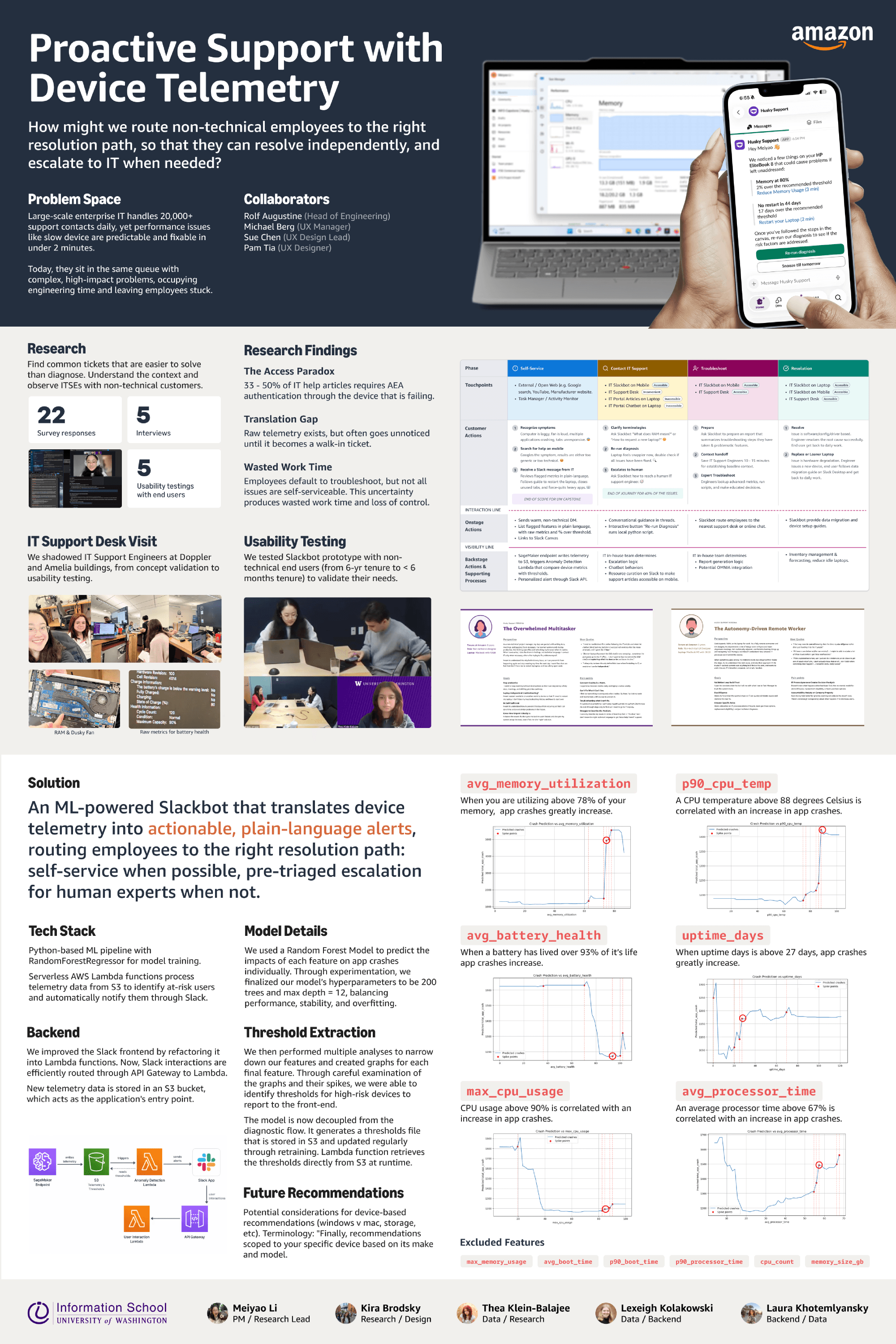
A predictive model identifies sustained patterns correlated with device failure.
Context
Most system crashes are preceded by measurable signals: rising boot times, elevated memory pressure, and degraded battery cycles. But users only see symptoms: “my laptop froze,” “it just went black.”
How might we detect early failure signals and intervene before disruption occurs?
Goal
Traditional IT support is reactive: a crash happens, a ticket opens, and a replacement ships. By then, unsaved work is gone and productivity is lost.
Our capstone shifts enterprise IT support toward predictive prevention. It translates raw device telemetry into plain-language guidance people can act on, then routes them to the right next step: self-fix, backup and replace, or reassurance—without wasting time on misdiagnosed tickets.
Approach
A predictive model identifies sustained patterns correlated with device failure.
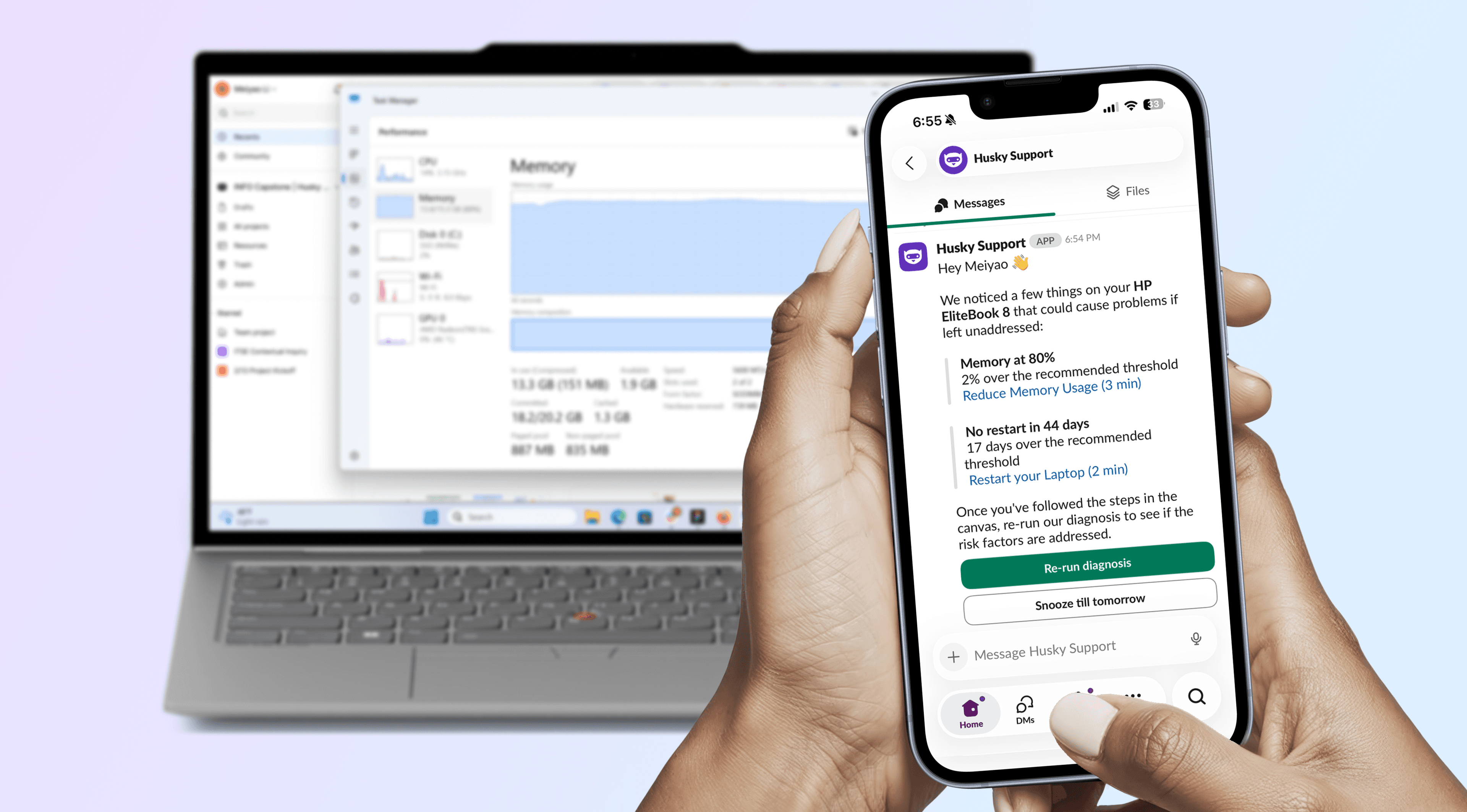
Husky Support turns technical signals into the impact, urgency, and action a person needs.
Slack DMs guide users to fix it themselves, prepare for replacement, or confidently do nothing.
Predictive support
Looks for sustained risk patterns, filters momentary noise, and learns from crash correlations.
Static monitoring
Triggers fixed rules from point-in-time snapshots, creating false positives from temporary spikes.
Research
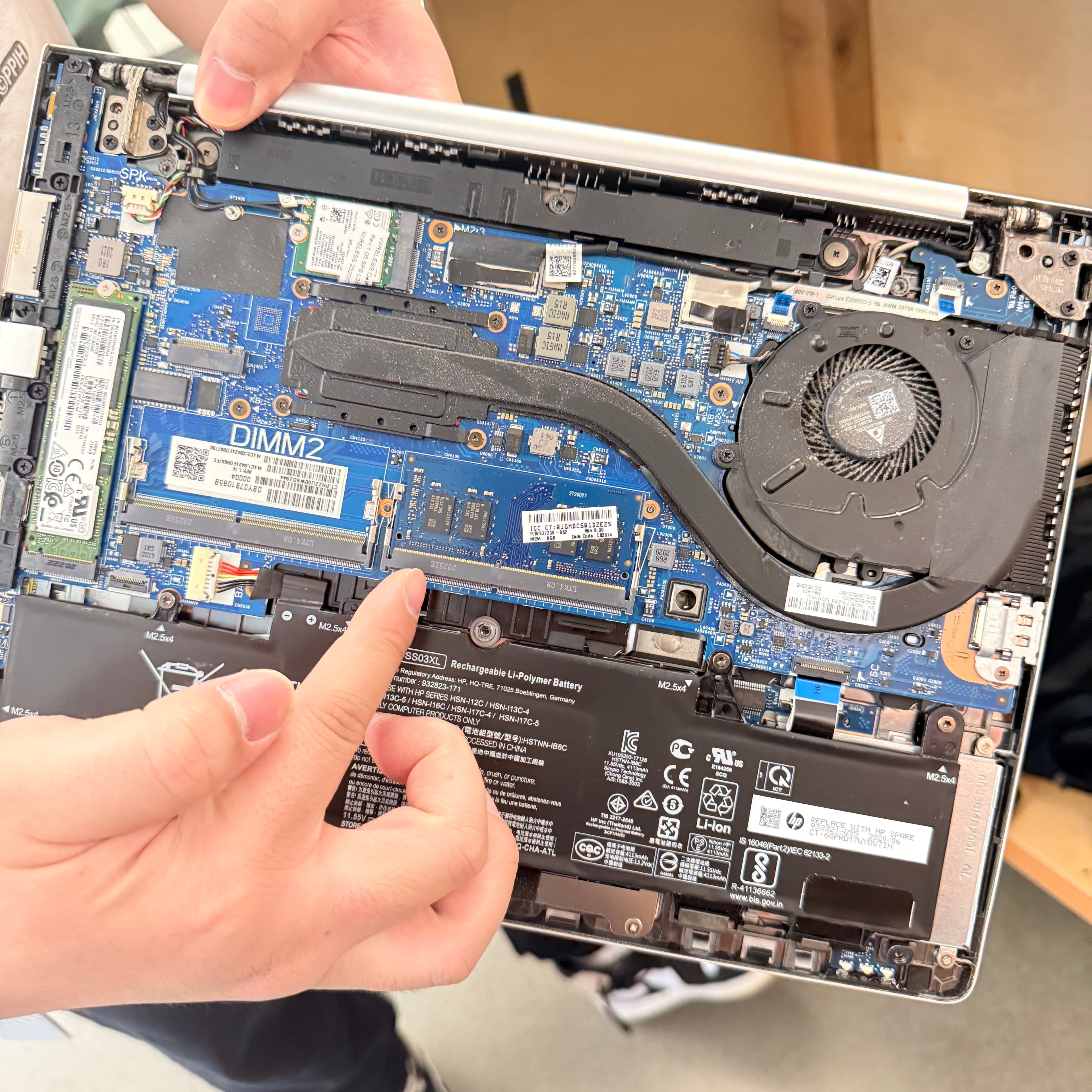
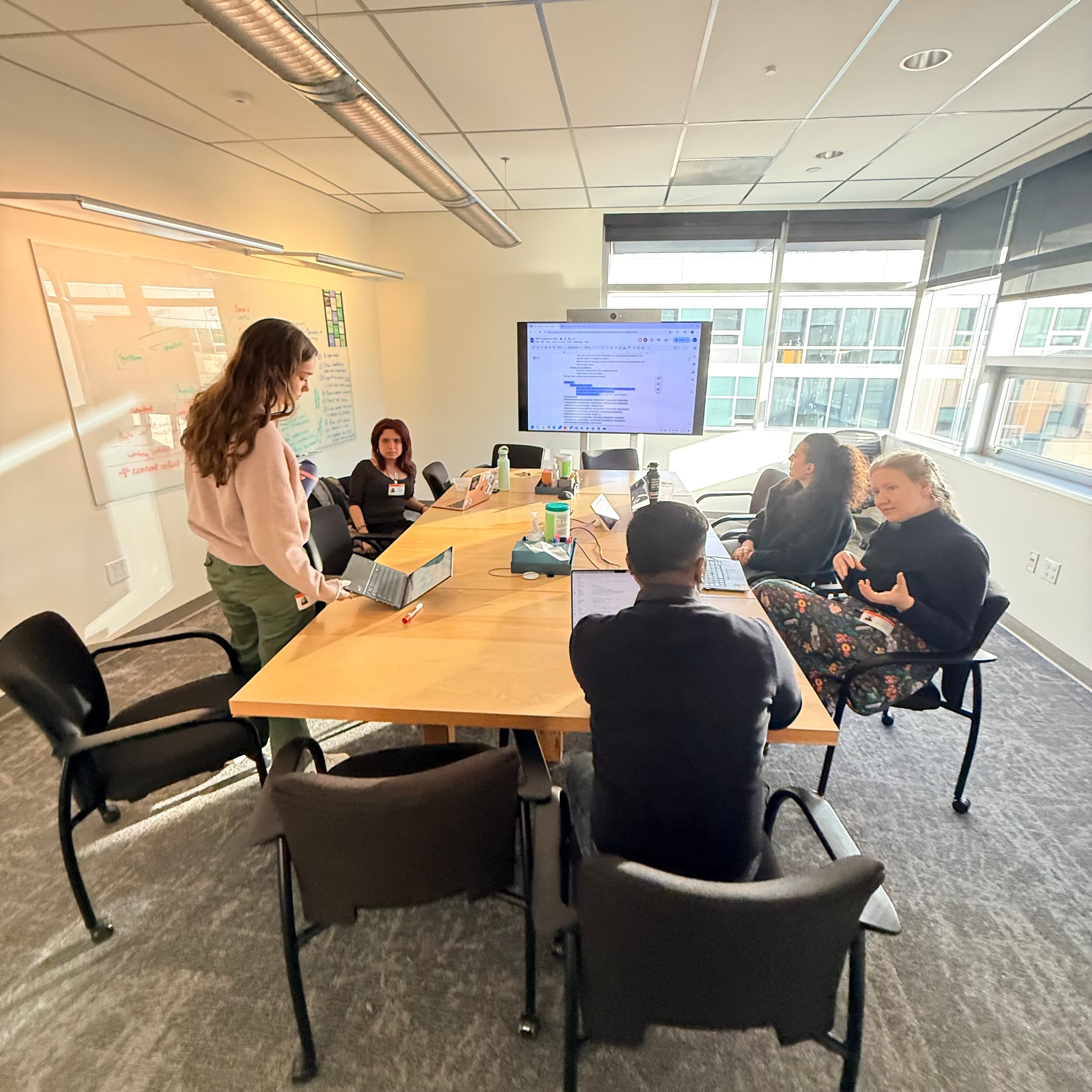
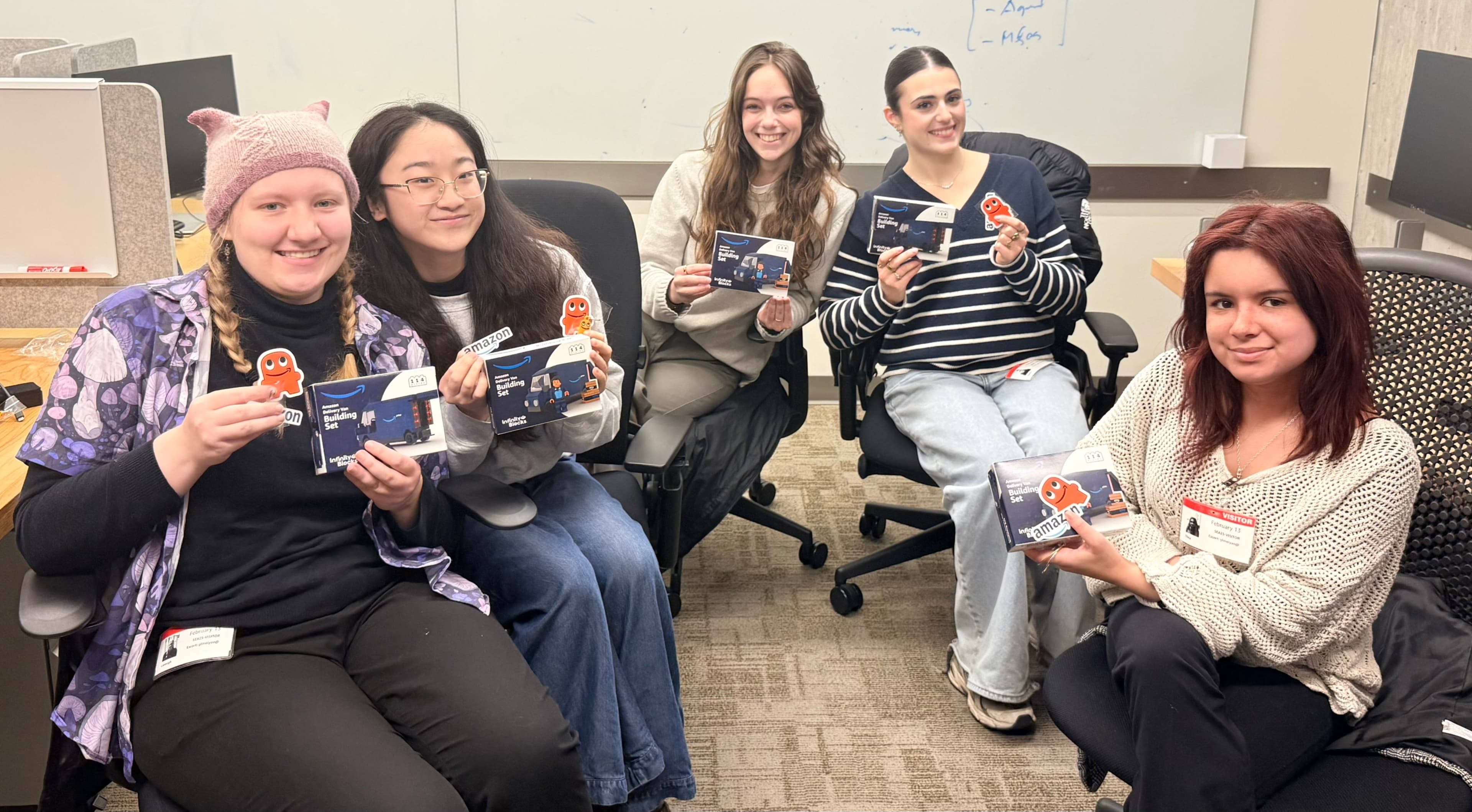
We surveyed 12 IT Support Engineers and interviewed four across in-person and online support. We then shadowed support desks to connect telemetry signals with the real constraints behind laptop issues.
We also tested the Slackbot concept with non-technical employees who had recently sought support for performance problems.
The gap was translation, not knowledge. Raw metrics need an understandable outcome and a concrete next action.
When a laptop will not boot, the portal can be inaccessible. Slack keeps help available from a phone or another device.
Users preferred a static canvas over gated chat steps: clarity, control, and progress matter when work is blocked.
Deliverable
Takeaways
A confidence score means nothing if someone cannot map it to an action. UX must translate system signals into human decisions.
The hardest design problem was being proactive in a helpful—not creepy—way. Alerts should arrive only when there is a meaningful path forward.
Leading a capstone taught me to trust the team. Sharing ownership made the work stronger and more sustainable.
This project is confidential. Reach out to me directly to learn more.
Learning